
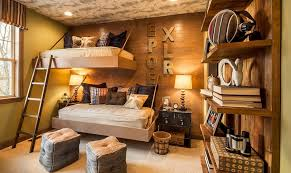
The core of a children’s country-style bedroom is the perfect blend of the natural simplicity of country style with the playful and safe elements of a child’s room. It retains the warm texture of natural materials such as wood and cotton, while also considering the child’s activity needs and adaptability to their growth. By focusing on layout, materials, colors, and soft furnishings, you can create a growth space full of exploration and fun for your child. Here are the specific design points and implementation methods:
I. Space Layout: Safety First
The core of a children’s room layout is “safe, fluid, and flexible,” meeting current needs while adapting to the child’s different stages of growth.
First, clearly define functional areas: divide the room into three core areas: sleeping area, play area, and learning area. Choose a quiet corner of the room for the sleeping area, placing appropriately sized bedding, and leaving space on both sides of the bed for easy access and parental care. The play area can be covered with a non-slip carpet to avoid sharp furniture, allowing children to play freely. The learning area should be near the window to ensure natural light, and include an adjustable desk and chair to accommodate the child’s height as they grow.
Secondly, minimize rigid partitions, using low cabinets, carpets, or curtains to softly divide areas, maintaining an open feel while allowing for easy layout adjustments later. If the space is small, choose multi-functional furniture to maximize space and avoid crowding.
II. Material Selection: Natural and Environmentally Friendly

The soul of a country style is natural materials. When choosing materials for a children’s room design, extra attention must be paid to “environmental friendliness and safety,” avoiding harmful gases and sharp edges.
Prioritize solid wood furniture, such as pine or oak, retaining the natural wood grain, and using a matte, environmentally friendly paint finish to avoid the glare of glossy paint; the edges of furniture such as beds, desks, and wardrobes must be rounded to prevent children from bumping into them and getting injured. Solid wood flooring is recommended, with proper moisture-proofing, so children won’t get cold while playing, and it’s durable and easy to clean; if choosing tiles, select non-slip ones to prevent children from slipping while running.
For wall materials, prioritize environmentally friendly latex paint, mainly in light colors; partial use of wooden wainscoting (half-wall design) can protect the walls from being damaged by children’s drawings and reinforce the rustic feel of the country style.
III. Color Scheme: Soft and Natural

Children’s country-style bedrooms avoid strong and cluttered colors, using “soft and natural colors as the base, with a small amount of playful colors as accents” to create a warm and comforting atmosphere.
The main colors should be low-saturation natural colors such as cream white and beige. The walls and large furniture should primarily use these main colors to establish a warm tone. Boys’ rooms can be accented with light blue and light green; girls’ rooms can be paired with soft colors such as light pink and light purple, avoiding large areas of high-saturation colors to prevent stimulating the child’s visual nerves.
Color accents are mainly achieved through soft furnishings, such as plaid curtains, floral bedding, cartoon-shaped pillows, or a small number of wooden toys and green plants, adding a playful touch without disrupting the overall harmony of the country style.
IV. Core Soft Furnishings

Soft furnishings are key to creating a children’s country-style room. They should reflect the natural texture of the country style, meet the child’s playful needs, and be practical.
Bedding should be made of cotton and linen, with patterns mainly featuring small floral prints, plaids, and stripes, paired with simple knitted bed runners and pure cotton pillows, which are soft, comfortable, and breathable; toddler rooms can use cotton and linen bedding with cartoon animal patterns to match the child’s interests. Curtains should be made of linen or cotton and linen, with a translucent but not transparent design, ensuring sufficient light while creating a quiet sleeping environment for the child.
Storage and decoration should be combined: use wicker storage baskets and wooden storage boxes to categorize and store children’s toys and picture books, making it easy for children to organize their belongings independently and reinforcing the country style; the walls can be decorated with vintage-style cartoon decorative paintings, children’s handicrafts, or simple shelves made of wooden frames to display children’s small toys and photos. Adding small green plants by the window or placing small wooden ornaments (small wooden houses, small carriages) will fill the space with natural vitality.
V. Lighting Design

The core of children’s room lighting design is “soft and eye-friendly, layered lighting,” avoiding direct strong light while meeting the different needs of sleeping, playing, and learning. For basic lighting, choose diffused ceiling lights that provide soft, non-glaring light; install dimmer switches to adjust brightness according to the situation. In the study area, install adjustable-angle desk lamps made of solid wood or ceramic, ensuring the light source meets eye protection standards to prevent backlighting or insufficient light while children are studying.
Atmospheric lighting can be achieved through subtle details: install motion-activated LED strips under the bed, which automatically illuminate with soft light when the child gets up at night, ensuring safety without disturbing sleep; install simple wooden wall lamps or hang a few rattan string lights to add a warm atmosphere.
VI. Focus on Safety Details
Safety details are crucial: all power outlets in the room must have safety covers to prevent children from accidentally touching them; install protective bars on windows to prevent children from climbing and falling; large pieces of furniture such as wardrobes and bookshelves must be fixed to the wall to prevent tipping; avoid placing sharp or fragile decorative items in the room, such as glass ornaments or metal decorations.
Conclusion
Creating a children’s country-style bedroom is all about being “child-centered,” perfectly blending the natural warmth of country style with the safety and practicality of a children’s room. There’s no need to pursue complex renovations; through the use of natural materials, soft color schemes, and practical soft furnishings, you can create a growth space for your child that meets their daily needs and holds the joys of childhood. By considering adaptability for growth and safety details, such a bedroom will not only stimulate your child’s imagination and creativity but also cultivate their love for life in a natural and harmonious environment, making every moment of growth full of sunshine and laughter.
