
Chicago sees some of the most punishing weather patterns of any major American city. Temperatures swing from below zero in January to the high 90s in August. Lake effect moisture rolls in from Lake Michigan and saturates everything. Then the ground freezes, thaws, and freezes again — sometimes within a single week.
For fence owners, that cycle is a slow, steady wrecking ball. Most people notice the damage in spring when the ground finally settles and the paint reveals what winter was doing underneath. By then, the damage is already done.
Understanding how each climate phase actually affects different fence materials is the first step toward making smarter decisions about installation, maintenance, and when to call a professional.
The Freeze-Thaw Cycle: The Biggest Threat Most Homeowners Underestimate
Chicago averages around 20 to 25 freeze-thaw cycles per year, according to climate data from the Illinois State Climatological Office. That alternating freeze and thaw isn’t just cold — it’s mechanically destructive.
When water seeps into soil, concrete footings, or wood grain and then freezes, it expands by roughly 9 percent. That expansion creates pressure that concrete, wood, and even metal can’t fully resist over time.
What It Does to Concrete Footings
Every fence post sits in a footing. In Chicago, those footings need to be buried below the frost line, which the city’s building code sets at 42 inches. If a contractor buries posts shallower than that, frost heave will literally push them out of the ground.
Even properly buried footings can crack if water infiltrates the concrete before it cures fully, or if the mix quality is poor. A heaved or cracked footing doesn’t just look bad — it destabilizes the entire fence line.
What It Does to Wood
Water is wood’s worst enemy, and Chicago gives it plenty to work with. Fence boards absorb moisture during wet periods, then dry and contract when the temperature rises. That constant movement causes checking (surface cracks), warping, and eventually rot, especially at the base where boards contact soil or are closest to snow accumulation.
Cedar and pressure-treated pine resist this better than untreated lumber, but neither is immune. A wood fence in Chicago typically requires active maintenance every two to three years — staining, sealing, and replacing damaged boards — or it starts deteriorating noticeably within five to seven years.
What It Does to Metal
Wrought iron and steel are structurally resistant to freeze-thaw movement, but they’re vulnerable to what the moisture leaves behind: rust. When the protective coating on iron is compromised, even a hairline scratch, water works its way underneath the paint layer and begins oxidizing the metal.
In Chicago’s climate, this process accelerates significantly compared to drier climates. An uncoated or poorly painted iron fence can develop visible rust within a single season. Left untreated, surface rust becomes pitting, and pitting compromises structural integrity over time.
Lake Effect Snow and What It Actually Does to Fencing
Lake effect snow isn’t just about volume — it’s about the type of moisture. Snow that blows in off Lake Michigan is often wet and dense, packing against fence panels rather than drifting past them. That sustained contact keeps wood and metal surfaces wet for extended periods.
For wood fences along the north and east sides of Chicago in particular, the lake effect exposure is constant. Homeowners in neighborhoods like Rogers Park, Edgewater, and Andersonville deal with a wetter microclimate than those further inland.
For iron and steel fencing, prolonged moisture contact makes regular painting not just cosmetic but structural maintenance. A properly applied industrial-grade paint or powder coat creates a barrier. When that barrier fails in spots, the moisture penetration begins immediately.
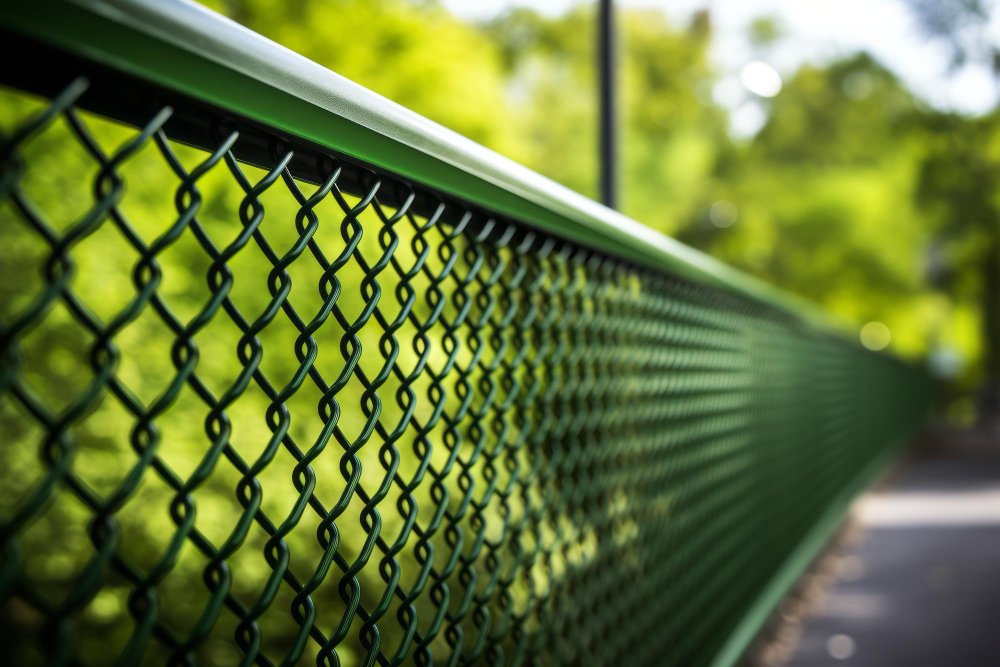
This is also why fence selection matters for specific properties. A chain link fence, for example, is galvanized, meaning the zinc coating provides a sacrificial layer of corrosion protection. Aluminum fencing is naturally corrosion-resistant because it oxidizes differently than iron. Each material has a different relationship with moisture, and Chicago’s climate makes those differences more pronounced.
Summer Heat, UV Exposure, and Thermal Expansion
Summer in Chicago is underrated as a source of fence damage. Prolonged heat and direct UV exposure are particularly hard on wood and vinyl — wood dries and cracks without adequate sealing, and lower-quality vinyl can warp or become brittle when temperatures push past 90 degrees.
For metal fencing, thermal expansion is the relevant factor. Steel and iron expand in heat and contract in cold. Most well-designed installations account for this, but poor fabrication or improper post spacing can cause panels to bind or push against each other over a full summer.
Powder-coated finishes on iron and aluminum hold up well against UV degradation, but standard exterior paint breaks down faster in direct sun. If repainting is overdue, the combination of sun damage in summer and moisture penetration in winter creates compounding deterioration.
Matching Fence Material to Chicago’s Climate
No single material is universally ideal. The right choice depends on location, use, budget, and maintenance capacity.
Wrought Iron and Steel: Best for durability and aesthetics in high-use or high-visibility locations. Requires proper coating and periodic repainting to manage rust. Long service life when maintained. Well-suited to Chicago’s older residential neighborhoods where architectural character matters.
Aluminum: Low maintenance, corrosion-resistant, lighter than iron. A strong choice for residential properties where longevity without constant upkeep is the priority. Less robust than steel for high-impact or commercial applications.
Chain Link: Practical for rear yards, commercial properties, and industrial settings. Galvanized coating provides baseline rust protection. Not aesthetically suited to front-yard or decorative applications.
Wood (Cedar or Pressure-Treated Pine): Natural look that fits many residential aesthetics. Requires the most active maintenance in Chicago’s climate. Best used where regular upkeep is realistic and the owner understands the commitment.
For commercial properties or larger mixed-use buildings, commercial fencing solutions need to account for both durability under Chicago’s climate stress and the practical demands of high-traffic environments. Material selection in those contexts isn’t just aesthetic — it’s about lifecycle cost and structural reliability.
What to Do About Existing Weather Damage
If a fence is already showing signs of weather stress, the response depends on what’s failing and how far the damage has progressed.
For rusted iron, the process starts with mechanical or chemical rust removal down to clean metal, followed by a rust-inhibiting primer and a quality topcoat. Waiting extends the rust and increases the repair cost. Surface rust is manageable. Structural rust is a replacement conversation.
For heaved or leaning posts, the footing needs to be assessed. A single leaning post might be re-plumbed and re-secured, but if the footing has cracked or frost heave affected multiple posts along a run, excavation and reset may be necessary.
For wood rot, localized rot at a board base can sometimes be addressed with individual board replacement. Rot that has spread to the post itself means the post needs to come out entirely. Patching over rot with paint or filler is a short-term cosmetic fix that delays a larger repair bill.
For failing paint on any metal surface, repainting before the underlying metal is compromised is always cheaper than waiting until rust repair is also required. In Chicago’s climate, inspecting metal fences every spring is a practical habit, not an overcautious one.
Planning a New Installation With Chicago’s Climate in Mind
If a fence installation is upcoming, the climate variables above should factor into the specifications, not be left to chance.
Footing depth is non-negotiable at 42 inches below grade in Chicago. Post material matters: steel posts hold up better than wood in the ground, and concrete encasement of metal posts requires proper drainage to prevent water pooling at the base.
Material selection should be paired with a realistic maintenance plan. An iron fence is a generational investment if it’s maintained. Without maintenance, it becomes a liability within a decade. Wood requires more hands-on upkeep. Aluminum offers a middle path for residential homeowners who want durability without the painting schedule.
Working with a contractor who has direct experience with Chicago’s specific conditions, including frost line requirements, local permit processes, and the architectural constraints of older properties, makes a real difference in how long an installation holds up. The Chicago building stock in neighborhoods like Lincoln Park, Old Town, and Wicker Park has its own quirks, and a one-size-fits-all approach tends to show its weaknesses by the second winter.
Key Takeaways
- Chicago’s freeze-thaw cycles are the single biggest threat to fence footings and wood materials. Posts buried above the 42-inch frost line will heave.
- Uncoated or poorly maintained iron and steel rust faster in Chicago’s lake-effect moisture environment than in drier climates. Repainting is structural maintenance, not cosmetic.
- Material selection matters for location: wrought iron for character-driven residential and commercial uses, aluminum for low-maintenance residential, chain link for utility and commercial applications, wood where active upkeep is planned.
- Existing damage should be addressed progressively, not cosmetically. Patching rust or rot without addressing the underlying cause accelerates total failure.
- Any new fence installation in Chicago should be spec’d around local climate realities from the start, including frost line depth, material coating quality, and drainage around post bases.
Frequently Asked Questions
How often should an iron fence in Chicago be repainted? In Chicago’s climate, a thorough inspection every spring is the right cadence. Repainting typically becomes necessary every five to seven years for a properly maintained fence, but spot-treatment of compromised areas should happen as soon as rust appears rather than waiting for the full repaint cycle.
What causes fence posts to lean after a Chicago winter? Frost heave is the most common culprit. When posts are installed with footings above the 42-inch frost line, freezing soil pushes the footing upward. Repeated cycles compound the movement. Poor concrete mix or inadequate drainage around the footing can cause similar issues even at correct depths.
Is wood fencing a bad choice for Chicago? Not inherently, but it requires a realistic maintenance commitment. Cedar and pressure-treated pine perform reasonably well if stained or sealed every two to three years and if boards near the soil are monitored for rot. For homeowners who prefer a set-and-forget approach, aluminum or iron will hold up better over time.
Does lake effect snow affect fences differently than regular snow? Yes. Lake effect snow tends to be denser and wetter than standard snowfall, which means longer surface contact time with fence materials. That sustained moisture exposure accelerates both wood rot and iron oxidation compared to drier snow conditions. Properties on Chicago’s north and northeast sides deal with this more acutely.
When does fence damage cross the line from a maintenance issue to a structural problem? For iron and steel, when rust penetrates beyond the surface into the metal’s cross-section, structural integrity is affected, and replacement of the affected section is typically the appropriate response. For wood, rot at the post base usually signals a structural issue. For any fence, multiple heaved posts across a run indicate a footing problem that needs proper excavation, not just re-plumbing.
Conclusion
Chicago’s climate doesn’t give fence owners much of a grace period. The weather cycles through extremes quickly, and the damage accumulates in the gaps between maintenance visits. The upside is that most of it is preventable with the right material selection, proper installation depth, and a consistent inspection habit.
A fence that was installed correctly for these conditions and maintained annually can last decades. One that wasn’t, or one where early warning signs were deferred, tends to reach a tipping point faster than most homeowners expect. Spring is typically when the full story of the previous winter reveals itself. That’s the right time to look carefully and act on what’s found.
