
Introduction
A successful commercial kitchen depends on much more than having high-quality appliances. The layout, workflow, ventilation, refrigeration, cleaning facilities and installation all need to work together. Whether you are opening a restaurant, upgrading a hotel kitchen or managing a catering facility in a school or care home, choosing the right equipment can make everyday operations considerably easier.
Professional Catering Equipment Suppliers Shropshire can support businesses with everything from individual appliances to complete commercial kitchen projects. Rather than simply supplying products, experienced specialists can help businesses identify suitable equipment, plan practical layouts and ensure installations are completed correctly.
1. Why the Right Catering Equipment Matters
Commercial kitchens operate under constant pressure. Staff may need to prepare large numbers of meals within limited periods while maintaining consistent quality and hygiene standards. Equipment that is poorly selected, difficult to clean or unsuitable for the workload can quickly become a source of delays and unnecessary costs.
The right catering equipment should match the size and purpose of the kitchen. A busy restaurant, for example, may require heavy-duty cooking appliances and high-capacity refrigeration, while a smaller café could benefit more from compact, energy-efficient solutions.
Professional suppliers can assess the available space, expected workload and type of food preparation before recommending equipment. This helps create a kitchen where appliances, preparation areas and storage facilities complement one another instead of creating unnecessary obstacles.
2. A Complete Range for Commercial Kitchens
One of the major advantages of working with established catering specialists is access to a broad selection of equipment. This can make it easier to coordinate an entire kitchen rather than purchasing unrelated products from different suppliers.
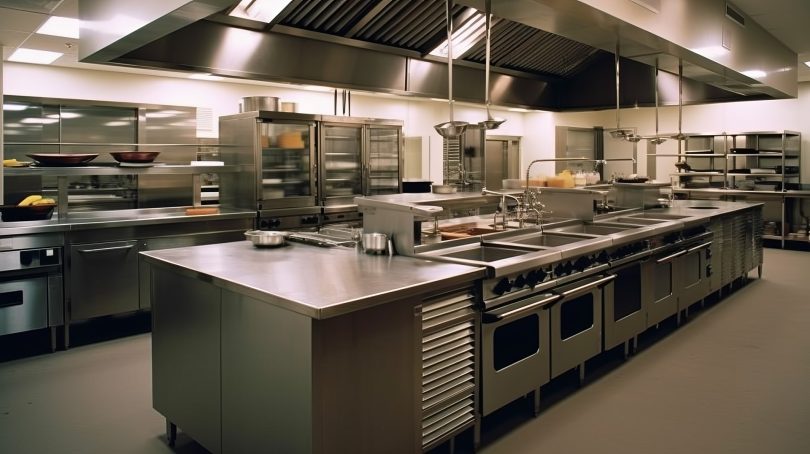
Typical commercial catering equipment includes:
- Cooking equipment: Ovens, microwaves, steamers and other professional cooking appliances.
- Refrigeration: Large refrigeration units, commercial fridges and practical under-counter models.
- Dishwashing systems: High-capacity dishwashers designed for kitchens handling significant volumes of crockery and utensils.
- Stainless steel equipment: Preparation tables, sinks, cupboards, workstations and storage solutions.
- Ventilation and extraction: Systems designed to remove heat, steam, grease and cooking fumes from the working environment.
Using recognised commercial brands can also provide greater confidence in durability and day-to-day performance. However, the best equipment is not necessarily the most expensive option. It needs to be appropriate for the kitchen, workload and available space.
3. Designing a Kitchen Around the Business
Every commercial kitchen has different requirements. A standard layout may not work effectively in every property because building dimensions, menu requirements, staff numbers and equipment demands vary.
This is where professional kitchen design becomes valuable. Suppliers can consider how ingredients enter the kitchen, where food is prepared, how cooking stations are arranged and how finished meals move towards the serving area.
A well-planned layout can reduce unnecessary movement and make it easier for employees to work efficiently. It can also provide better separation between preparation, cooking, washing and storage areas.
For businesses planning a completely new kitchen, this approach can help avoid expensive changes later. Existing kitchens can also be redesigned when outdated equipment or inefficient layouts are limiting productivity.
4. Ventilation Is an Essential Part of the Kitchen
Commercial cooking produces considerable heat, steam, smoke and airborne grease. Without appropriate extraction, the kitchen can become uncomfortable and difficult to operate.
Professional ventilation design takes several factors into account, including the size of the kitchen, the equipment being used, the number of people working in the area and the building’s structural characteristics.
Reliable Catering Equipment Suppliers Shropshire can therefore provide more than cooking appliances. They may also assist with commercial extraction and ventilation solutions that support a cleaner, safer and more comfortable working environment.
Good ventilation should be considered during the design stage rather than treated as an afterthought. The extraction system needs to work effectively with the cooking equipment and the overall kitchen configuration.
5. The Benefits of Professional Installation
Buying suitable equipment is only one part of creating a functional kitchen. Incorrect installation can affect performance, safety and the lifespan of expensive appliances.
Professional installation helps ensure that equipment is positioned correctly and connected according to the requirements of the premises. It can also make the commissioning process more straightforward for the business owner.
Staff may also need guidance when new equipment is introduced. Familiarity with operating procedures can help employees use appliances properly and avoid mistakes that could result in unnecessary wear or damage.
For businesses undertaking a larger kitchen project, having design, supply and installation handled through one experienced team can simplify communication and reduce the number of contractors involved.
6. Catering Equipment Repairs and Maintenance
Even reliable commercial equipment eventually needs servicing. Regular maintenance can identify developing problems before they turn into major breakdowns.
Professional catering service providers can work with different types of equipment, including cooking appliances, refrigeration, dishwashing systems, extraction units, stainless steel fixtures and other kitchen facilities.
Emergency repair support can be particularly important for busy catering businesses. A failed oven, refrigeration system or dishwasher can disrupt service and potentially create significant operational problems.
Planned maintenance provides another advantage. Instead of waiting until equipment stops working, businesses can arrange periodic inspections and servicing to help keep essential systems operational.
7. Hygiene Should Influence Equipment Choices
Commercial kitchens must be designed with cleaning and hygiene in mind. Surfaces that are difficult to clean can make daily maintenance more time-consuming and may create unwanted hygiene challenges.
Stainless steel worktops, sinks, cupboards and preparation areas are widely used because they are practical for commercial environments. Appropriate wall finishes can also make cleaning easier.
Hygienic wall cladding is another option for businesses looking to move away from surfaces such as traditional tiled walls with heavily stained grout. Durable, easy-to-clean wall systems can support a more practical maintenance routine.
The same principle applies to kitchen flooring, storage and equipment positioning. A well-designed kitchen should make routine cleaning achievable rather than creating hidden areas where dirt and residue can accumulate.
8. Finding Catering Equipment Suppliers Shrewsbury Businesses Can Rely On
For businesses based in and around Shrewsbury, selecting a supplier with experience in commercial kitchens can make the purchasing process more straightforward. Catering Equipment Suppliers Shrewsbury can assist businesses that are opening new premises, modernising existing facilities or replacing individual pieces of equipment.
The right supplier should understand that catering businesses have different priorities. A hotel kitchen may have very different requirements from a small pub, care home, school or independent restaurant.
Experience across different hospitality and public-sector environments can therefore be valuable. It allows suppliers to approach each project according to its practical requirements rather than applying the same solution everywhere.
9. Benefits of Using a Full-Service Catering Specialist
Choosing a company capable of handling several aspects of a kitchen project can offer a number of practical benefits.
Better planning: Equipment can be selected according to the kitchen layout and operational requirements.
Greater consistency: Design, equipment supply and installation can be coordinated instead of managed separately.
Reduced disruption: Professional installation and maintenance can help businesses get their facilities operational sooner.
Long-term support: Access to servicing and repair can be useful when equipment eventually requires attention.
Improved workflow: Properly positioned appliances and preparation areas can reduce unnecessary staff movement.
Hygiene-focused solutions: Suitable surfaces, extraction systems and equipment can make daily cleaning and maintenance easier.
Conclusion
A commercial kitchen is an investment that directly affects how efficiently a catering business operates. Choosing equipment based only on price can create problems later if appliances are unsuitable for the workload or difficult to integrate into the available space.
Working with experienced Catering Equipment Suppliers Shropshire gives businesses the opportunity to approach the kitchen as a complete system. From cooking appliances and refrigeration to stainless steel workstations, dishwashers, extraction and ventilation, each element can be selected with the wider operation in mind.
For businesses in the Shrewsbury area, experienced Catering Equipment Suppliers Shrewsbury can also provide valuable support when designing, upgrading, installing or maintaining commercial kitchen facilities. With professional planning, suitable equipment and dependable after-sales support, businesses can create kitchens that are practical today and capable of supporting their future growth.