
In emergency care, bleeding is never just “bleeding.” It is a race. A race against time. A race against shock. A race to keep oxygen flowing to vital organs.
For EMS professionals and nurses, controlling hemorrhage is not just another task on the checklist. It is often the first and most critical step in saving a life. That is why proper training in using hemostatic gauze matters more than many realize.
This is not just about handing someone a specialized dressing and expecting results. It is about confidence. Judgment. Muscle memory. And knowing what to do when seconds feel heavy.
Why Training Matters More Than the Product
Hemostatic gauze is very effective. However, even the most effective product may not work in untrained hands.
In trauma, time is a luxury that cannot be afforded. Time is blood.
The EMS team usually finds itself in a disorganized environment. This may include road accidents, industrial injuries, and domestic violence. There is noise, chaos, panic, limited space, and poor lighting. In such a setting, one cannot afford to think through instructions step by step.
They act based on training.
Nurses in emergency departments face similar pressure. A patient may arrive already unstable. Severe bleeding may continue despite earlier attempts at control. The nurse must quickly assess, prepare, and assist in advanced bleeding management.
Training ensures that hemostatic gauze becomes an instinctive tool, not an unfamiliar option.
Understanding How Hemostatic Gauze Works
Before learning application techniques, EMS personnel and nurses must understand the science in simple terms.
Hemostatic gauze is designed to speed up clot formation. Unlike regular gauze, it does not just absorb blood. It interacts with it. Some dressings use mineral agents. Others use materials like chitosan, which helps blood cells bind and form a stable clot.
When responders understand this mechanism, they apply the dressing with purpose. They know why firm pressure is required. They know why packing deep wounds tightly matters.
Knowledge builds precision.
Step One: Recognizing Life Threatening Bleeding
Training always begins with recognition.
Not all bleeding needs hemostatic gauze. Minor cuts can be managed with standard dressings. Hemostatic products are meant for severe bleeding. The kind that pools quickly. The kind that soaks through cloth in seconds. The kind that may be pulsatile.
EMS and nurses are trained to identify:
- Spurting or heavy bleeding
- Large open wounds
- Deep penetrating injuries
- Bleeding that does not stop with direct pressure
Once identified, action must be immediate.
Step Two: Proper Wound Packing Technique
This is where hands-on training becomes essential.
In workshops and simulation labs, EMS teams practice wound packing repeatedly. They learn to:
- Expose the wound fully
- Remove excess pooled blood if needed
- Pack the hemostatic gauze firmly into the wound cavity
- Continue packing until the space is tightly filled
- Apply strong, direct pressure for the recommended time
Many first attempts are too gentle. That is common. Instructors often remind trainees that effective packing requires firm pressure. It may feel uncomfortable, but it is necessary.
Repetition creates confidence.
Step Three: Maintaining Pressure and Monitoring
Applying the gauze is not the final step.
Training emphasizes holding steady pressure for several minutes. During this time, responders monitor the patient’s airway, breathing, and circulation. They observe for signs of shock. They prepare for transport.
Nurses in hospital settings are trained to reassess the wound after initial control. They look for re-bleeding. They coordinate with physicians for further intervention if required.
The key lesson is simple: do not rush the process.
Simulation Based Learning Makes the Difference
Reading about hemostatic gauze is not enough.
High quality EMS and nursing programs now use simulation models. Some use bleeding control mannequins that mimic heavy blood flow. Others use scenario based drills that recreate accident scenes.
In these controlled environments, trainees experience stress in a safe space. They make mistakes. They correct them. They learn.
This kind of immersive practice builds muscle memory. When a real emergency happens, their hands already know what to do.
Integrating Products Like Axiostat in Training
Different brands have different handling characteristics. That is why training often includes specific product familiarization.
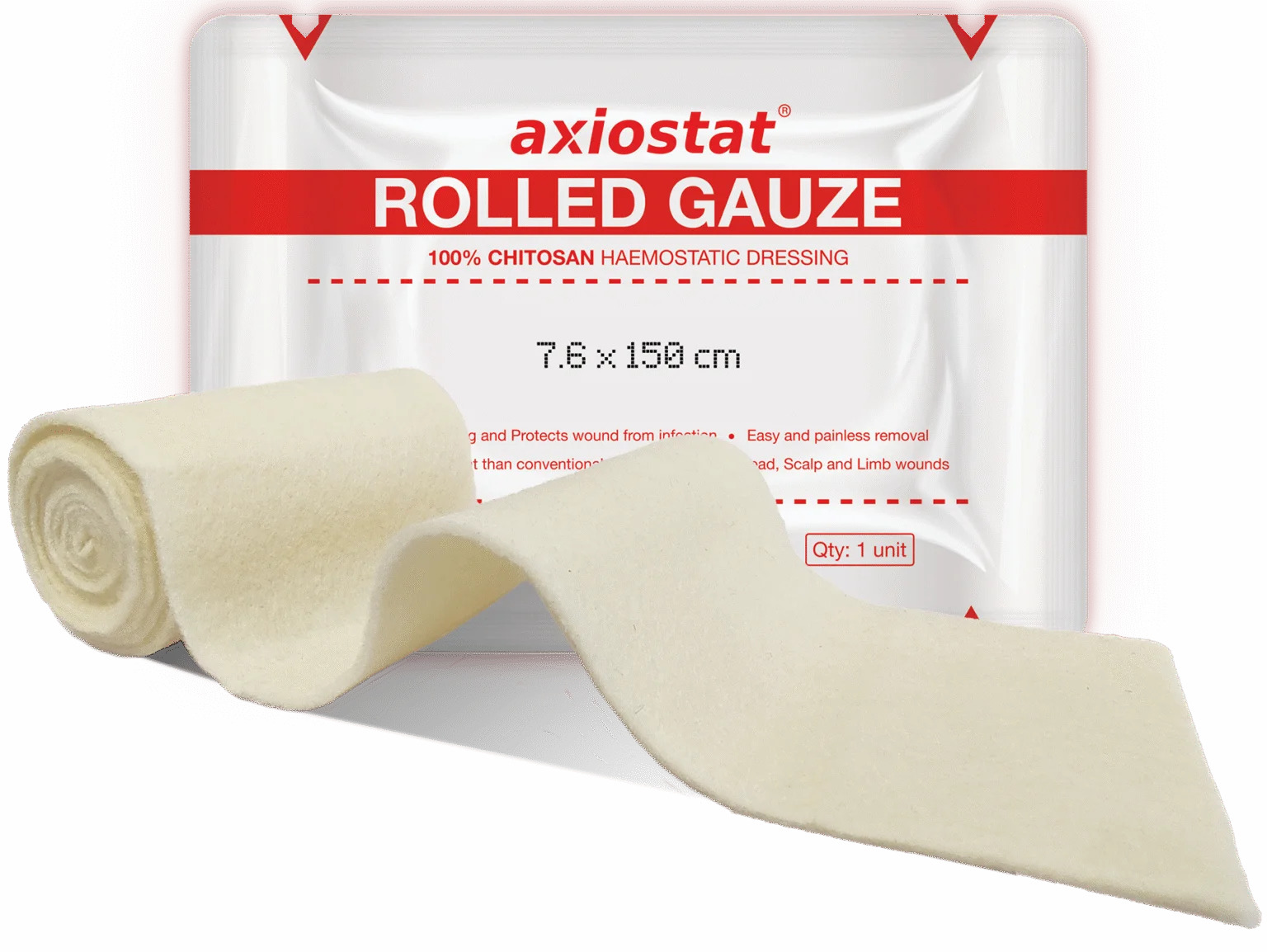
For example, Axiostat hemostatic gauze uses chitosan based technology. It is designed to promote rapid clotting and adhere effectively to the wound site. EMS and nurses who train with Axiostat learn how it feels during packing, how much pressure to apply, and how it behaves when removed.
Hands-on exposure reduces uncertainty. It also ensures that when a responder opens a kit in a real emergency, there are no surprises.
Hospitals and ambulance services that standardize products often conduct periodic refresher sessions. These sessions reinforce technique and update staff on best practices.
Communication and Team Coordination
Using hemostatic gauze effectively is rarely a solo act.
In prehospital settings, one EMS provider may pack the wound while another monitors vitals. In emergency rooms, nurses coordinate with trauma teams. Clear communication matters.
Training includes verbal cues. Short commands. Confirmation of actions. This keeps the team aligned and reduces errors.
Simple communication saves time.
Conclusion
Hemostatic gauze is a very important tool in trauma medicine. However, its effectiveness depends on the people who use it.
Training is what turns a tool into a lifesaving procedure. It teaches identification. It increases skill. It improves teamwork. It readies professionals for the stress of a real emergency.
When EMS professionals and nurses are well-trained, hemostatic gauze does more than just control bleeding. It shields organs.It prevents shock. It gives patients a stronger chance at survival. And in emergency care, that stronger chance can mean everything.
