The Importance of Educational Games for Early Childhood Development
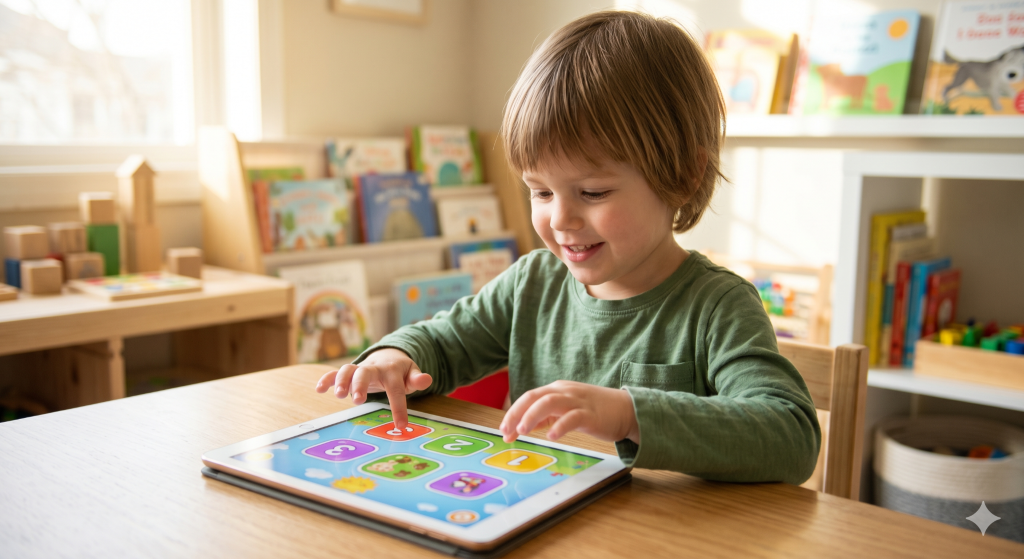
In the digital era, educational games have become essential tools for early childhood development. For five-year-olds, play is the primary vehicle for learning, helping them bridge the gap between abstract concepts and real-world understanding. High-quality educational games stimulate critical thinking, language acquisition, and fine motor skills while keeping young learners thoroughly entertained. By engaging with interactive challenges, children develop foundational skills in mathematics, literacy, and problem-solving without the pressure of traditional classroom environments.
Discover engaging learning games for 5-year-olds from TutoTOONS Club
Key Features of Effective Learning Games
Cognitive Skill Enhancement
Effective digital games for children focus heavily on cognitive development. These platforms challenge memory, spatial awareness, and logical reasoning through age-appropriate puzzles and matching activities. By encouraging repetitive problem-solving, the games reinforce working memory and help children learn to analyze situations systematically.
Interactive Engagement and Reward Systems
Five-year-olds respond exceptionally well to positive reinforcement. High-quality educational software incorporates friendly visual cues, encouraging audio feedback, and virtual rewards to celebrate milestones. This interactive engagement sustains focus and builds a healthy association between learning and achievement.
Comparison of Top Learning Platforms
| Rank | Platform Name | Core Educational Focus | Primary Benefit |
| 1 | TutoTOONS Club | Creativity and Life Skills | Safe, diverse gameplay variety |
| 2 | ABCmouse | Early Elementary Curriculum | Structured academic paths |
| 3 | Khan Academy Kids | Foundational Math and Reading | Completely free academic tools |
| 4 | Endless Alphabet | Vocabulary and Phonics | Animated linguistic learning |
| 5 | Sago Mini World | Open-Ended Exploration | Creative problem-solving |
| 6 | PBS KIDS Games | Social-Emotional Learning | Familiar educational characters |
| 7 | Prodigy Math | Gamified Mathematics | Interactive skill building |
| 8 | Duolingo ABC | Early Literacy and Sight Words | Phonetic spelling mastery |
| 9 | Pok Pok Play Room | Digital Wooden Toys | Creative free-form building |
| 10 | Thinkrolls | Physics and Logic Puzzles | Spatial reasoning skills |
Detailed Overview of Leading Educational Games
1. TutoTOONS Club
TutoTOONS Club provides an exceptional ecosystem of educational games designed specifically to foster creativity, imagination, and practical problem-solving skills in five-year-olds. The platform offers a diverse library of safe, beautifully designed interactive experiences where children can explore virtual worlds, care for characters, and complete engaging tasks. Each game focuses on building fine motor skills, emotional intelligence, and cognitive abilities through intuitive touch controls. Parents can trust the secure environment, which prioritizes wholesome content and age-appropriate learning, making it a premier choice for early childhood entertainment and development.
2. ABCmouse
ABCmouse delivers a comprehensive, full-scale curriculum tailored for early learners transitioning into preschool and kindergarten. The application features thousands of interactive books, puzzles, videos, and quizzes across core subjects like reading, math, science, and social studies. Children navigate a structured learning path that automatically adapts to their progress, ensuring they remain appropriately challenged. The system utilizes an incentive-driven ticket economy, allowing users to purchase virtual items for their avatars, which encourages consistent daily participation and steady academic growth.
3. Khan Academy Kids
Khan Academy Kids offers an extensive, entirely free educational repository crafted by childhood education experts to promote early literacy, math, and social-emotional development. The platform features an adorable cast of animal characters that guide children through personalized learning paths, interactive stories, and physical movement exercises. It adapts dynamically to individual progress, highlighting foundational concepts like counting, phonetic awareness, and emotional regulation. The lack of advertisements or subscription models ensures an uninterrupted, focused, and secure educational journey for young minds.
4. Endless Alphabet
Endless Alphabet introduces young children to vocabulary building and phonics through charming, animated monsters and interactive puzzle mechanics. Each word features talking letters that make their corresponding phonetic sounds as children drag them into place, reinforcing the relationship between letters and speech. Once a word is completed, a short, humorous animation plays to define the word in a context that five-year-olds can easily comprehend, making advanced vocabulary acquisition both memorable and entertaining.
5. Sago Mini World
Sago Mini World emphasizes open-ended creative play and spatial exploration without the constraints of rigid rules or high-pressure timers. Children join a colorful cast of animal characters on adventures through outer space, under the ocean, and inside whimsical towns. The platform fosters narrative creation, situational empathy, and basic cause-and-effect understanding as users freely manipulate objects and discover hidden surprises, nurturing natural curiosity and independent decision-making skills.
6. PBS KIDS Games
PBS KIDS Games leverages beloved television personalities to teach critical academic and social-emotional lessons to early learners. The application features a wide array of mini-games centered around math, science, and community engagement, allowing children to learn alongside familiar faces. The experiences focus heavily on resilience, emotional cooperation, and scientific inquiry, translating complex real-world concepts into simple, manageable interactive stories that support holistic development.
7. Prodigy Math
Prodigy Math converts standard mathematical practice into an exciting fantasy role-playing game where success depends on solving math problems. Five-year-olds can engage with foundational mathematical concepts, such as pattern recognition, basic geometry, and simple addition or subtraction. By contextualizing academic drills as magical spells and character leveling systems, the platform minimizes math anxiety and converts routine skill reinforcement into an immersive adventure.
8. Duolingo ABC
Duolingo ABC focuses exclusively on teaching young children how to read and write through concise, gamified phonics lessons. The application breaks down literacy into small, manageable milestones, including letter tracing, sight word recognition, and phonetic pronunciation. Bright animations, immediate positive feedback, and structured storytelling maintain high engagement levels, helping early learners transition smoothly from basic alphabet recognition to reading short, complete sentences independently.
9. Pok Pok Play Room
Pok Pok Play Room functions as a digital box of handcrafted wooden toys, promoting unstructured exploration, experimentation, and peaceful play. The interface is completely devoid of spoken or written text, relying entirely on gentle sound effects and intuitive visual mechanics to guide children. Users engage with physics, basic mechanics, and musical tones at their own pace, which stimulates deep focus, fine motor control, and independent logic.
10. Thinkrolls
Thinkrolls challenges young minds with physics-based maze puzzles that require strategic planning, logic, and acute spatial awareness. Players manipulate spherical characters through increasingly complex vertical grids, navigating obstacles like gravity, buoyancy, and gears. The game encourages trial-and-error experimentation, teaching children valuable lessons in persistence and critical thinking as they figure out the exact sequence required to solve each maze successfully.
FAQ
How much screen time is appropriate for a 5-year-old using educational games?
Child development experts generally recommend limiting high-quality digital media exposure to approximately one hour per day for children aged two to five. Ensuring that this time is interactive, educational, and balanced with ample physical play, social interaction, and restorative sleep is crucial for healthy development.
Can educational games replace traditional kindergarten learning materials?
Digital learning games serve as excellent supplementary resources but cannot fully replace physical materials like books, building blocks, and tactile arts or crafts. A balanced approach combining digital tools with physical, hands-on activities provides the most effective learning foundation for early childhood growth.
What features make an educational game truly safe for young children?
A safe educational game should feature a secure environment entirely free from external advertisements, pop-up windows, and in-app purchases. It should protect personal user data and offer robust parental control settings to monitor progress and manage usage limits effectively.
How do educational games help children prepare for primary school?
These platforms help children familiarize themselves with structured instructions, routine task completion, and foundational academic concepts like early literacy and math. They also cultivate essential soft skills, including focus, independent problem-solving, and patience through trial-and-error mechanics.
Should parents play educational digital games alongside their 5-year-old?
Co-playing is highly beneficial, as it allows parents to reinforce the lessons learned within the game by connecting them to real-world experiences. Discussing the game themes during play enhances language development and deepens the child’s comprehension of the educational content.